What are the automation and intelligence aspects of the heat sealing process for infusion pressure bags
The heat sealing process of infusion pressurized bags has the following innovative points in terms of automation and intelligence:
Fully automated production line integration:
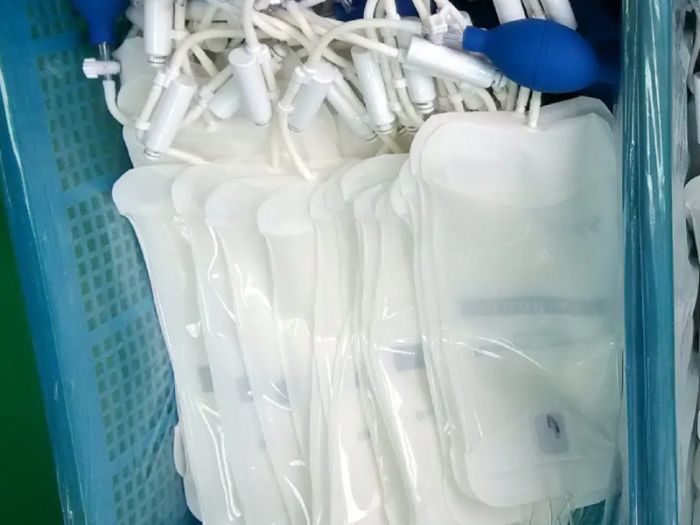
The modern infusion pressurized bag production line adopts a fully automated integrated system, covering processes such as unloading, leveling, printing, manipulator catheter insertion, high-frequency heat sealing, sling welding, pressure detection and material collection. The various workstations are connected by conveyor belts to achieve continuous production from raw materials to finished products, significantly improving production efficiency and yield rate.
High-frequency heat sealing and intelligent control:
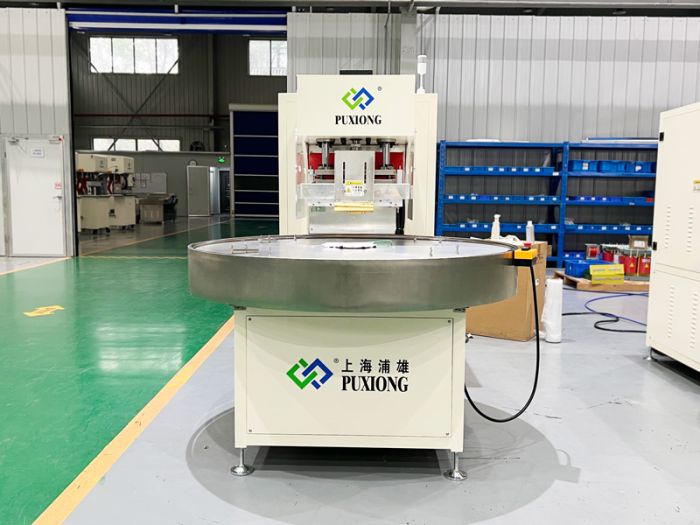
The high-frequency heat sealing device is combined with a PLC programming full computer control system to realize the automation of processes such as feeding, guiding, cursor tracking, welding molding, precise pulling and slicing. High-frequency heat sealing technology uses high-frequency electromagnetic fields to generate heat through friction of material molecules to achieve rapid fusion. At the same time, the PLC system ensures precise control of heat sealing parameters to ensure product quality consistency.
Intelligent detection and quality monitoring:
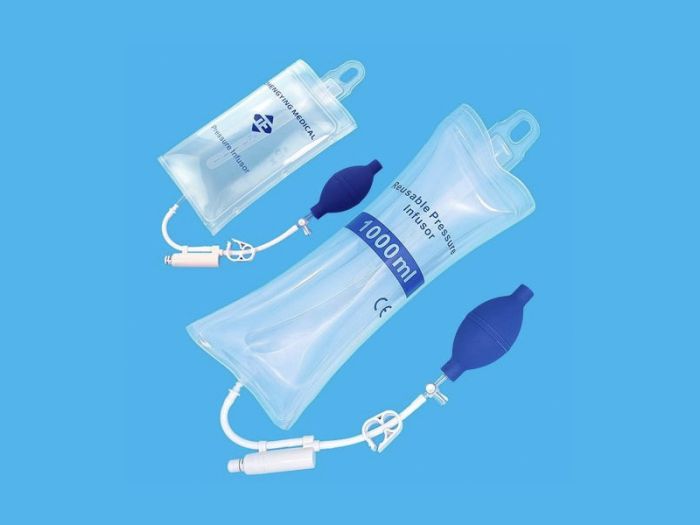
The production line is equipped with intelligent detection stations, which use the principle of inflation to detect the pressure and capacity of medical bags and automatically identify defective products. Through high-precision sensors and real-time data analysis, the system can quickly eliminate unqualified products, reduce manual intervention, and improve the controllability and reliability of the production process.
Human-machine collaboration and operation optimization:
The touch screen operation interface is used to simplify the equipment control process and reduce the difficulty of operation. The human-machine collaboration design enables staff to monitor the production status in real time, adjust parameters or handle abnormal situations in a timely manner, and reduce the intensity of manual labor through automated processes to improve overall production efficiency.
Data-driven process optimization:
The heat-sealing temperature, pressure, time and other data collected during the production process are used for process optimization analysis. Through big data technology, enterprises can identify production bottlenecks, predict equipment maintenance needs, and continuously improve heat-sealing process parameters to achieve the dual goals of quality improvement and cost reduction.