What are the uses of a nitrogen-filled sealing machine
The nitrogen-filled sealing machine creates a low-oxygen or oxygen-free environment by filling high-purity nitrogen into the packaging and sealing it. It is widely used in industries such as medicine, food, electronics, and chemicals. Its core uses are to extend the shelf life of products, prevent oxidation and deterioration, protect sensitive substances, and enhance the safety of packaging. The following is a detailed analysis of the specific uses:
1. Pharmaceutical industry: ensuring drug safety and effectiveness
Inhibiting microbial growth
Oxygen is a necessary condition for the reproduction of aerobic microorganisms (such as molds and yeasts). Nitrogen filling and sealing can reduce the oxygen concentration in the package to ≤1%, effectively inhibiting microbial activity and extending the shelf life of drugs.
Case: Antibiotic powder injections, Chinese medicine granules and other drugs that are prone to moisture absorption and agglomeration, nitrogen filling packaging can prevent deliquescence and deterioration.
Prevent drug oxidation
As an inert gas, nitrogen can isolate oxygen and prevent the active ingredients in drugs (such as vitamin C and adrenaline) from being oxidized and decomposed, ensuring stable drug efficacy.
Case: Vitamin C for injection, soft capsules containing unsaturated fatty acids, etc., nitrogen filling packaging can reduce the loss of active ingredients.
Protect special dosage forms
Liquid drugs: such as infusion bags and eye drops, nitrogen filling can prevent the liquid from generating bubbles due to shaking during transportation, and at the same time avoid oxidation and deterioration.
Fragile drugs: such as glass ampoules and freeze-dried powder injections, nitrogen filling forms a positive pressure environment to prevent packaging damage.
Meet the requirements of medical sterility
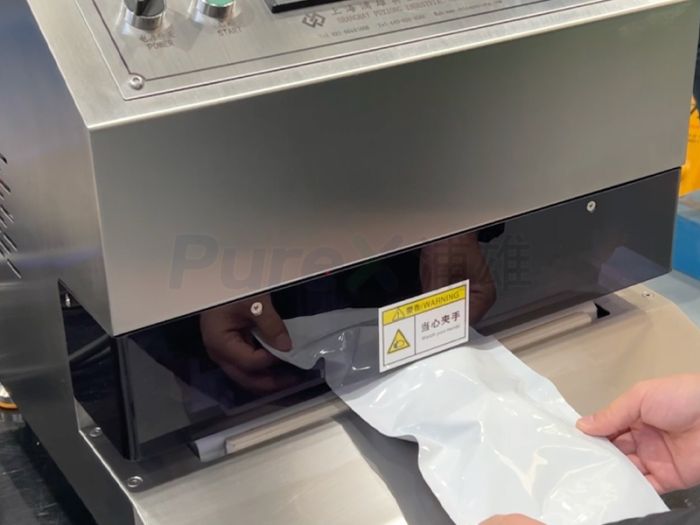
Nitrogen-filled sealing machines are often equipped with functions such as ultraviolet light sterilization and hot-pressed sealing to ensure the sterility of the packaging process and meet the GMP standards of the pharmaceutical industry.
2. Food industry: Extend shelf life and improve quality
Prevent oil oxidation and rancidity
Oil-containing foods (such as nuts, potato chips, and biscuits) are prone to produce rancidity under the action of oxygen. Nitrogen-filled packaging can delay oxidation and keep the taste crispy.
Data: Nitrogen-filled packaging can extend the shelf life of potato chips from 3 months to 12 months.
Inhibit mold growth
Baked foods (such as bread and cakes) are susceptible to mold contamination. Nitrogen-filled packaging can reduce water activity and inhibit mold growth.
Case: After a brand of short-shelf-life bread is packaged with nitrogen, the shelf life is extended from 7 days to 21 days.
Protect freshness
Coffee beans: Nitrogen filling can prevent the aroma of coffee from volatilizing and keep the flavor rich.
Milk powder: Nitrogen-filled packaging can avoid fat oxidation, prevent agglomeration and nutrient loss.
Alternative preservatives
Nitrogen-filled packaging extends the shelf life by physical means and reduces the use of chemical preservatives, which is in line with the trend of healthy consumption.
3. Electronics industry: Protect precision components
Moisture-proof and anti-oxidation
Electronic components (such as chips and circuit boards) are sensitive to humidity. Nitrogen-filled packaging can reduce the humidity in the package and prevent oxidation and corrosion of metal pins.
Case: A mobile phone manufacturer uses nitrogen-filled packaging to transport motherboards, reducing the failure rate by 30%.
Anti-static damage
Some nitrogen-filled sealing machines are equipped with anti-static functions to prevent electronic components from being damaged by electrostatic discharge during the packaging process.
Buffering protection
After nitrogen filling, the packaging bag expands to form an air cushion, which can buffer the impact during transportation and protect precision components.
4. Chemical industry: safe storage and transportation
Prevent oxidation of flammable and explosive substances
Chemical raw materials (such as metal powders and organic solvents) are prone to spontaneous combustion or explosion in oxygen, and nitrogen-filled packaging can reduce the risk.
Case: After aluminum powder is packed with nitrogen, the spontaneous combustion temperature rises from 600℃ to 800℃.
Inhibit the loss of volatile substances
For volatile substances such as spices and solvents, nitrogen-filled packaging can reduce volatile losses and maintain stable product concentration.
Prevent moisture absorption and agglomeration
Powdered chemical raw materials (such as calcium carbonate and aluminum oxide) are prone to moisture absorption and agglomeration. Nitrogen-filled packaging can isolate moisture and maintain powder fluidity.
V. Applications in other industries
Cosmetics
Prevent oxidation of essential oils and active ingredients and maintain product efficacy.
Case: A high-end essence is packaged in nitrogen, and the retention rate of active ingredients is increased by 20% after opening.
Agricultural products
Extend the shelf life of fresh fruits, vegetables and meat and reduce rot losses.
Data: Nitrogen-filled packaging can extend the shelf life of strawberries from 3 days to 7 days.
Cultural relics and artworks
Nitrogen-filled packaging can isolate oxygen and moisture, preventing cultural relics from oxidizing, fading or moldy.
VI. Technical advantages of nitrogen-filled sealing machines
High efficiency and energy saving
Modern nitrogen-filled sealing machines use PLC control, which can accurately adjust the nitrogen filling amount, sealing temperature and time to reduce nitrogen waste.
Case: The nitrogen utilization rate of a certain model reaches 98%, which is 30% more energy-efficient than traditional equipment.
Intelligent operation
Equipped with a touch screen and automatic detection system (such as residual oxygen monitoring), it can store multiple sets of process parameters and realize one-key operation.
Strong adaptability
Supports a variety of packaging forms (such as bags, bottles, cans) and materials (such as aluminum foil, PE, paper-plastic composite bags).
Safety and environmental protection
Nitrogen is the main component of air (78%), non-toxic and harmless, and meets environmental protection requirements.