Overview of Ear Bulb Production Equipment
Overview of Ear Bulb Production Equipment
In today's consumer market, ear bulbs (a common personal care product) are experiencing growing demand. To meet this demand, ear bulb production equipment has evolved significantly and become increasingly sophisticated. Below, we outline the main types of equipment used in ear bulb manufacturing.
I. Automated Assembly Equipment
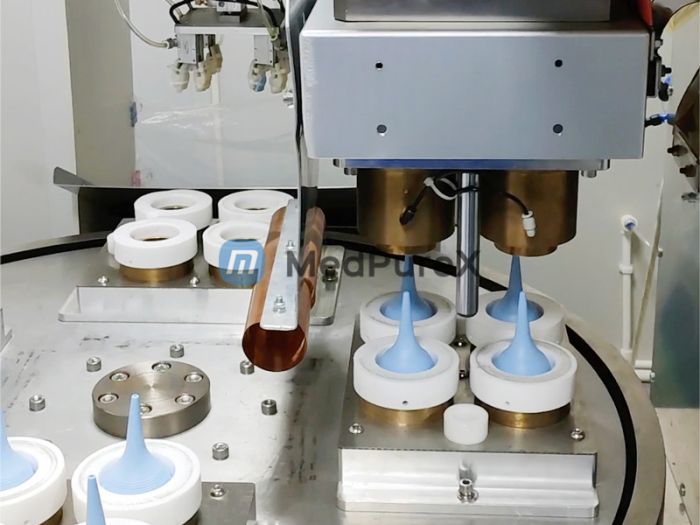
Automated assembly is a critical phase in ear bulb production. Key machinery includes:
- Automatic Injection Molding Machines: For shaping bulb components.
- Robotic Material Handling Systems: For precise loading/unloading of materials.
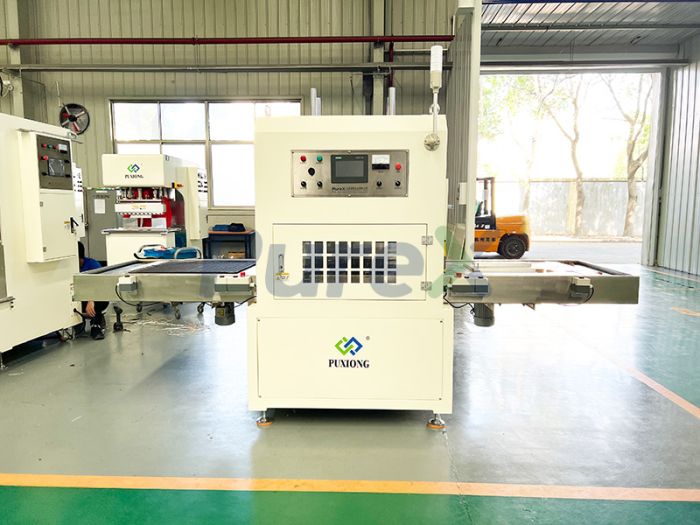
- High-Frequency Welding Equipment: For bonding semi-finished products.
These systems enhance production efficiency and ensure consistent quality. Among them, high-frequency welding equipment is particularly crucial, as it determines whether the final product meets quality standards. This equipment thermally bonds materials (e.g., silicone, rubber, or plastic) by applying high-frequency energy to semi-finished ear bulbs within molds.
II. Precision Inspection Equipment
Quality assurance relies on advanced inspection tools such as:
- High-Speed Optical Imaging Systems: Verify dimensions and surface integrity.
- Ultrasonic Testing Devices: Detect internal defects.
- X-Ray Inspection Equipment: Ensure structural accuracy.
These systems guarantee compliance with design specifications for size, aperture placement, and material integrity.
III. Packaging Equipment
Final packaging is handled by:
- Automated Packaging Machines: Enable rapid, precise sealing and labeling.
- Intelligent Vision Systems: Monitor packaging alignment and aesthetics.
This equipment ensures clean, damage-free packaging while maintaining high throughput.
IV. Quality Control Equipment
Continuous monitoring is achieved through:
- Real-Time Quality Sensors: Track parameters during production.
- Lab Analysis Instruments: Perform rigorous post-production testing.
These tools help identify and resolve issues promptly, ensuring product consistency and reliability.
Conclusion
Ear bulb production equipment covers the entire workflow—from raw material processing to final packaging. With advancements in automation and smart technologies, manufacturers can boost efficiency, reduce errors, and maintain competitiveness. Selecting the right equipment and implementing proactive maintenance are essential for long-term success in this growing market.