How can the sterility and biocompatibility of PVC blood bags be guaranteed
The sterility and biocompatibility of PVC blood bags are core requirements for ensuring the safety of blood storage and transfusion. These must be achieved through a coordinated effort across multiple stages, including material selection, production process control, sterilization, and rigorous testing. Below are the specific safeguards:
I. Sterility Safeguards
1. Raw Materials and Production Environment Control
- Medical-grade PVC materials:
- Use PVC compliant with ISO 10993 and USP Class VI standards to ensure absence of microbial contamination, endotoxins (≤0.1 EU/g), and heavy metal residues.
- Add antimicrobial agents (e.g., silver ions) or adopt antimicrobial coating technology to inhibit microbial growth during production.
- Cleanroom production:
- Production environment must meet ISO 14644-1 Class 7 or higher (Class 10,000 cleanroom), with temperature controlled at 18–26°C and humidity at 45–65%.
- Regularly monitor airborne particles (≥0.5 μm particles ≤352,000/m³) and microbial levels (airborne bacteria ≤100 CFU/m³).
2. Sterilization Process Selection
- Ethylene Oxide (EO) sterilization:
- Principle: Alkylation disrupts microbial DNA; suitable for heat-sensitive PVC.
- Parameters:
- Concentration: 400–800 mg/L
- Temperature: 40–60°C
- Humidity: 40–70% RH
- Sterilization time: 4–6 hours
- Aeration time: ≥7 days (50°C with ventilation) to ensure EO residue ≤5 μg/g.
- Advantages: Strong penetration for complex blood bag structures. Risks: Strict residue monitoring required.
- Radiation sterilization (γ-ray or electron beam):
- Principle: High-energy radiation disrupts microbial cell structures.
- Parameters:
- Dose: 25–40 kGy (adjusted based on microbial load)
- Uniformity: ≥90% (ensure consistent dose across all parts).
- Advantages: Residue-free, rapid sterilization (minutes). Risks: Possible PVC yellowing or brittleness; formula optimization required (e.g., adding anti-radiation stabilizers).
3. Aseptic Production Controls
- Automated closed production:
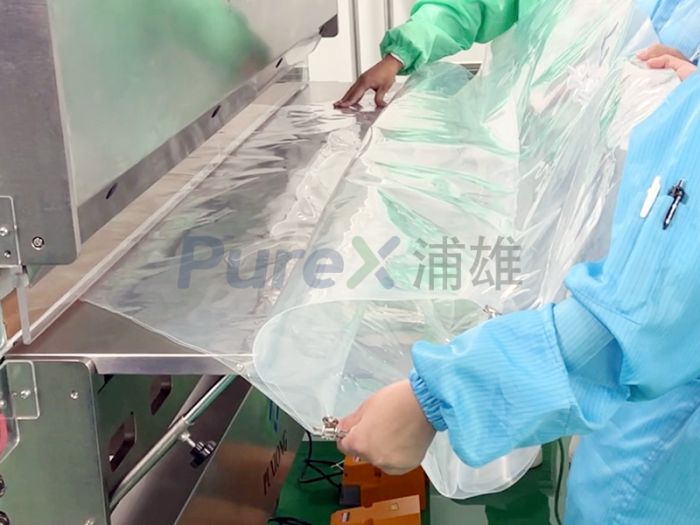
- Use fully enclosed piping systems to minimize human contact.
- Critical processes (e.g., heat sealing, filling) conducted under isolators or laminar flow hoods with "clean-to-dirty" airflow.
- Sterility testing and traceability:
- Conduct batch sampling for sterility testing (per Chinese Pharmacopoeia 2020 General Chapter 1101).
- Record sterilization parameters, operators, and test results via RFID or QR codes for full traceability.
II. Biocompatibility Safeguards
1. Material Safety Assessment
- Chemical composition control:
- Limit phthalates (e.g., DEHP); promote eco-friendly alternatives (e.g., TOTM, DINCH) with migration levels compliant with ISO 10993-17 (≤0.05 mg/cm²).
- Prohibit carcinogens (e.g., PAHs, heavy metals); detection methods include GC-MS, ICP-MS.
- Biocompatibility testing:
- Cytotoxicity Test (ISO 10993-5): L929 cell survival rate ≥80%.
- Sensitization Test (ISO 10993-10): No allergic reactions in guinea pigs via maximization method.
- Hemolysis Test (ISO 10993-4): Hemolysis rate ≤5%.
- Implantation Test (ISO 10993-6): No inflammation or fibrosis after 7-day muscle implantation.
2. Production Process Optimization
- Heat-sealing parameter control:
- Avoid high temperatures causing PVC decomposition (e.g., HCl release); maintain high-frequency sealing at 180–220°C.
- Use pulsed heating with ≤1-second cycles to minimize thermal exposure.
- Clean production:
- Rinse bags with ultrapure water (resistivity ≥15 MΩ·cm) to reduce organic residues.
- Avoid detergents containing sodium dodecyl sulfate (SDS), which may cause hemolysis.
3. Packaging and Storage Conditions
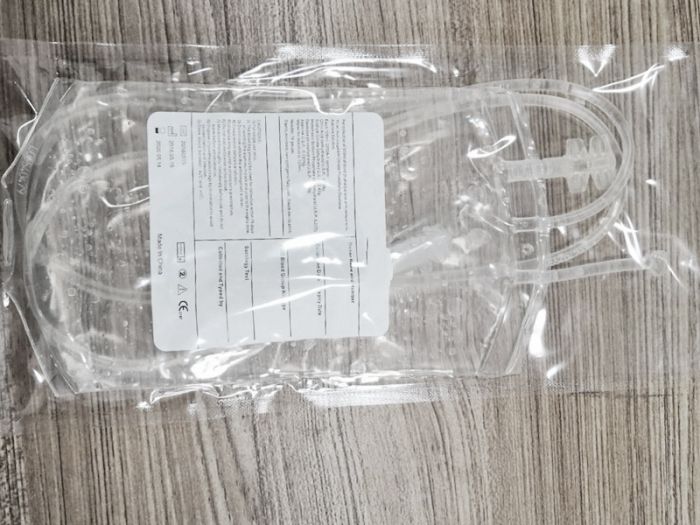
- Double-layer sterile packaging:
- Inner layer: breathable bacterial barrier (e.g., medical-grade paper).
- Outer layer: aluminum composite film.
- Packaging materials must comply with ISO 11607 (e.g., seal strength, drop testing).
- Storage requirements:
- Temperature: 5–25°C, protected from light.
- Humidity: ≤60% to prevent moisture-induced brittleness.
- Shelf life: Determined by stability testing (typically 2–5 years).