Fully automatic heat sealing machine for drainage bags
The fully automated heat-sealing machine for drainage bags is a specialized, high-end automated device used in medical device manufacturing to produce disposable drainage bags (such as chest drainage bags, abdominal drainage bags, and urine bags). This type of equipment has extremely high requirements for sealing, cleanliness, and production efficiency.
I. Equipment Positioning and Product Requirements
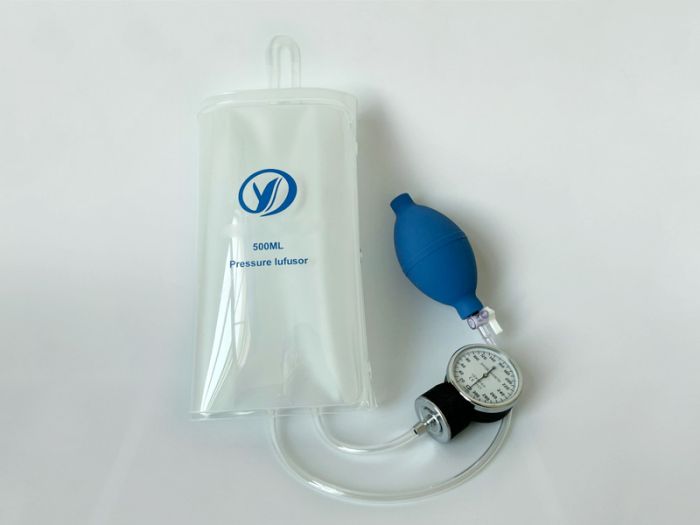
Drainage bags are common postoperative care consumables used to collect, measure, and observe fluid drainage from the body.
Structural Features: Typically includes the bag body, drainage tube interface, drain valve, measuring scale, hook, etc.
Materials: Primarily uses medical-grade PVC, EVA, or TPU film, requiring good biocompatibility, softness, transparency, and kinking resistance.
Production Challenges:
Multi-material, multi-component integration: Films, rigid interfaces, tubing, valves, etc., must be reliably welded/assembled together.
Precision sealing: All welds must be absolutely liquid-tight and airtight to prevent leakage and bacterial intrusion.
Clean production: Production must be carried out in a cleanroom (typically Class 10,000 or Class 100,000) to avoid particulate and microbial contamination. High Consistency: Medical products require consistent performance across every batch and every individual item.
II. Core Equipment Technology and Components
The fully automatic heat sealing machine is a complete production line integrating multiple processes:
1. Automatic Feeding System
Film Unwinding and Correction: Automatically unwinds rolled medical films, maintaining a smooth and precise feed.
Automatic Component Feeding: Precisely delivers rigid components such as drainage tube connectors, valves, and hooks to the welding station via a vibratory feeder, robotic arm, or customized feeder.
2. Core Welding System (Multi-Station Collaboration)
Typically employs high-frequency heat sealing as the primary method, combined with other technologies:
High-Frequency Heat Sealing Station:
Principle: Utilizes a high-frequency electric field to generate heat and fuse the molecules within polar materials such as PVC through friction. Ideally suited for welding the main body of drainage bags.
Function:
Bag Forming: Welds the bag's outline, internal drainage channels, and metering gas chamber.
Component Welding: "Dissimilar material welding" is performed on rigid components such as drainage tube interfaces and drain valve bases to the bag film. This is a technically challenging aspect, requiring precise mold and parameter control.
Advantages: High weld strength, excellent sealing, and neat edges (can be welded and cut as a single piece).
3. Online Inspection and Quality Control System
Visual Inspection System: Checks for missing components, correct positioning, and obvious weld defects.
High-Voltage Spark Leak Detector: Performs 100% online or sampling inspection of the bag body or critical welds. Ensures the integrity of the sterile barrier.
4. Post-Processing and Collection System
Automatic Cutting: Die-cuts continuous product sheets into individual drainage bags.
Automatic Coding/Inkjet Printing: Laser or ink printing of product batch numbers, expiration dates, and graduations.
Automatic Stacking/Counting Packaging: Automatically collects finished products, preparing them for the next sterilization stage.
5. Intelligent Central Control System
PC + PLC Control: Coordinates the synchronous operation of all workstations.
Touchscreen HMI: Operators can easily access different product formulations (e.g., 500ml urine bags, 1000ml chest drainage bags).
Data Traceability System: Completely records production parameters, output, scrap rate, and leak detection results. Data complies with GMP and FDA 21 CFR Part 11 regulations, achieving full-process traceability.
III. Key Equipment Advantages
* High Efficiency and Capacity: Fully automated operation replaces a large amount of manual labor, significantly reducing production costs.
* Excellent Quality Stability: Fixed machine parameters avoid the uncertainties of manual operation, ensuring consistent sealing of every product.
* Superior Process Capabilities: Reliably completes film-to-film welding and film-to-tubular component welding, meeting the complex structural requirements of drainage bags.
* Reduced Contamination Risk: High degree of automation, minimal human intervention, and better compliance with cleanroom production standards.
* Quick Changeover: By changing molds and calling different programs, production of different models of drainage bags can be switched in a short time.