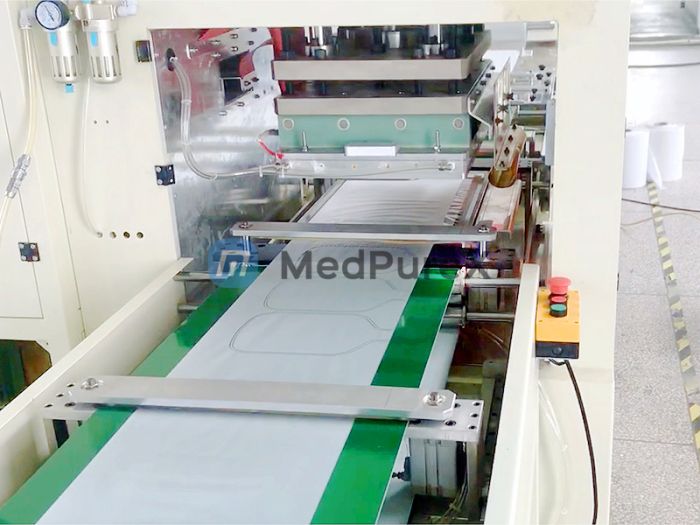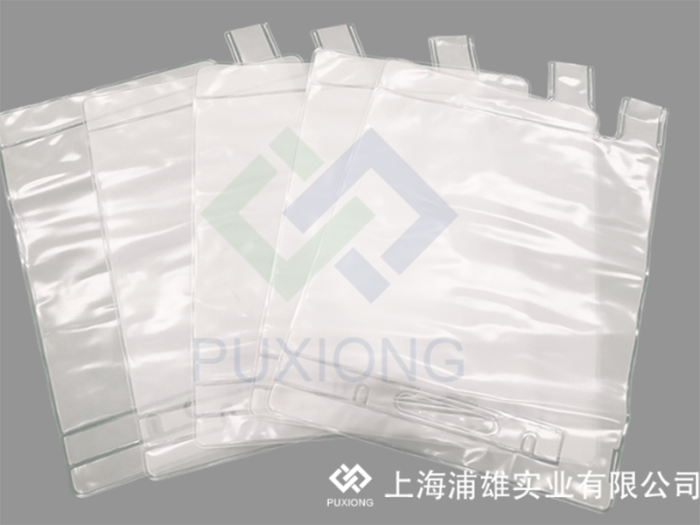
The heat sealing machine for the liquid collection bag in the diversion package: the precision manufacturing core of the surgical waste liquid collection system
In the sterile environment of the operating room, the collection bag within the shunt pack is a crucial component for collecting intraoperative waste fluids, and the reliability of its heat-sealing process directly impacts medical safety and patient prognosis. This article will delve into the technical principles, medical application scenarios, and compliance requirements of the collection bag heat-sealing machine, revealing its core value in the modern medical system.
I. Technical Principles: Precision Control of Molecular-Level Fusion The collection bag heat-sealing machine employs a synergistic technology of high-frequency electromagnetic fields and thermoplastic materials. A high-frequency electric field is generated through a self-excited oscillator in an electron tube, causing the molecules of the collection bag material (such as transparent PE film or composite TPU) to undergo intense friction and instantaneous heating under high-frequency action. Under mold pressure, the material's molecular chains rearrange, forming a seamless weld. This technology avoids the chemical residue risks that may arise from traditional adhesives, while ensuring that the seam strength reaches over 90% of the material's original strength. By precisely controlling the electric field frequency (typically 27.12MHz) and pressure parameters, the equipment can achieve seam treatment with a precision of 0.1mm, meeting the stringent requirements of medical-grade products for airtightness and impermeability.
II. Medical Application Scenarios: Adaptive Innovation for Multi-Specialty Surgeries
Intraoperative Waste Fluid Collection: The collection bag is heat-sealed to form a sealed bag body. Combined with support strips and sterile film dressings, it creates a sterile zone around the surgical site, effectively collecting blood, irrigation fluid, and other waste fluids generated during surgery, preventing the spread of contamination.
Specialty Surgery Customization: Supports rapid mold switching according to hospital needs, providing differentiated collection bag designs for specialized surgeries such as gynecology and orthopedics. For example, adding a drain valve to control waste fluid discharge facilitates postoperative management.
Sterile Barrier Maintenance: The heat-sealed seams must be verified according to ISO 11607-2 standards to ensure the integrity of the sterile barrier is maintained after sterilization, preventing the bidirectional transmission of bacteria and viruses between medical staff and patients.
III. Technical Standards and Compliance Requirements
International Standards: The equipment must comply with ISO 11607-2 "Packaging for terminally sterilized medical devices" standard. Pressure change tests under simulated transportation and storage environments ensure that the collection bag maintains the integrity of the sterile barrier after sterilization.
Domestic Standards: Adhering to GB/T 19633.2 standard, a complete 3Q validation system (Installation Qualification (IQ), Operational Qualification (OQ), and Performance Qualification (PQ)) is provided to ensure compliance throughout the equipment's lifecycle.
Materials and Processes: The material of the collection bag must pass ISO 10993 biocompatibility testing, and the heat-sealing process must meet EN 868's limits for temperature fluctuations (±1℃) and pressure deviations (<1.5%).
Sterilization Compatibility: The equipment must undergo ethylene oxide, damp heat, and irradiation sterilization tests in conjunction with a CNAS-certified laboratory to verify that the peel strength retention rate of the sealed samples after sterilization is ≥95%, and the bacterial retention rate reaches 99.9999%.
IV. Industry Development Trends and Challenges
With the increasing demands for minimally invasive surgery and infection control, collection bag heat-sealing machines are evolving in two directions:
Intelligent Upgrade: Integrating an AI visual inspection system to identify heat-sealing defects in real time and automatically adjust parameters, controlling the defect rate to below 0.3%.
Environmental Innovation: Utilizing recyclable TPU materials and optimizing the heat-sealing process to reduce energy consumption, the annual carbon emissions per unit are reduced by 40% compared to traditional models.
The current main challenge lies in controlling the rheological properties of medical-grade materials, requiring deep collaboration with the granulation production line to ensure batch-to-batch raw material stability. In the future, with the integration of 5G and industrial internet technologies, the equipment will achieve remote operation and maintenance and predictive maintenance, further ensuring the production continuity of medical protective products.
The liquid collection bag heat-sealing machine is not only a manufacturing tool but also a crucial barrier for medical safety. Through continuous technological iteration and alignment with clinical needs, it is driving the development of medical protective equipment towards a more intelligent, precise, and sustainable direction.