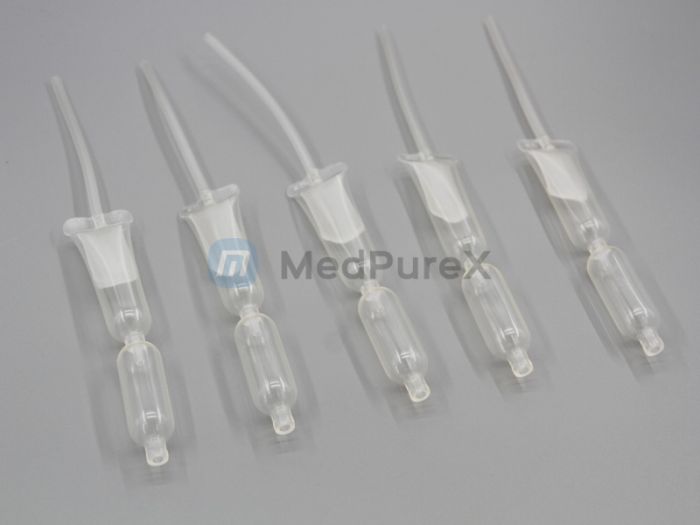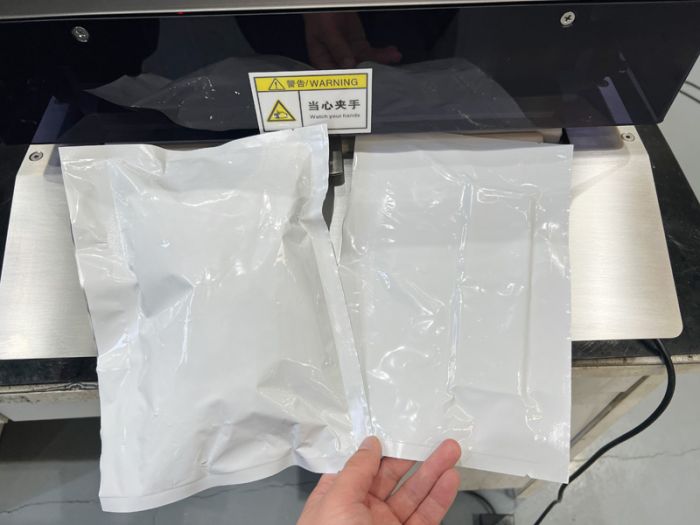
Detailed introduction to the welding of medical balloon catheters and a detailed explanation of the high-frequency welding machine used in their production.
I. Introduction to Medical Balloon Catheters
Medical balloon catheters are medical devices used to deliver blood or gas, widely used in cardiac catheterization surgery, vascular interventional therapy, and other fields. With the development of medical technology, the demand for medical balloon catheters is constantly increasing, and the requirements for their welding processes are also becoming more stringent. This article will detail the welding process of medical balloon catheters and the characteristics and advantages of high-frequency welding machines used in their production.
II. Welding Process of Medical Balloon Catheters
1. Preheating Treatment
Before welding, the areas of the medical balloon catheter to be welded need to be preheated to improve the fusion and sealing of the weld. The preheating temperature is usually controlled between 250-400°C, and the preheating time varies depending on the material and thickness.
2. Welding Methods
Currently, commonly used welding methods for medical balloon catheters include manual arc welding, gas shielded welding, and laser welding. Among them, gas shielded welding (such as MIG/MAG welding and TIG welding) has advantages such as large penetration depth, small deformation, and high welding efficiency, and therefore has been widely used in the manufacture of medical balloon catheters. 3. Post-Heat Treatment
After welding, appropriate post-heat treatment is required for the welded area to eliminate residual stress, improve the metallographic structure, and enhance the mechanical properties and corrosion resistance of the weld. The post-heat treatment temperature is typically controlled between 600-700°C, with a holding time of approximately 1 hour.
III. Introduction to High-Frequency Welding Machines
High-frequency welding machines are automated welding equipment that uses high-frequency current heating. They are widely used in fields such as medical balloon catheters, stainless steel products, and aluminum alloy products. High-frequency welding machines have the following characteristics and advantages:
1. High Efficiency and Energy Saving: High-frequency welding machines use induction heating, eliminating the need for contact heating. This results in high energy utilization, saving more than 50% of energy compared to traditional resistance welding furnaces.
2. Instantaneous Heating: The operating frequency of high-frequency welding machines reaches several kilohertz, instantly heating metal workpieces to the required temperature, greatly improving production efficiency.
3. Portable and Flexible: High-frequency welding machines are small in size and lightweight, making them suitable for welding operations in various confined spaces.
4. Precise Control: High-frequency welding machines can precisely set heating parameters and holding times according to the properties and requirements of different materials, achieving precise control over the welding process.
5. Environmentally Friendly: High-frequency welding machines produce no waste gas or wastewater emissions, meeting environmental protection requirements.
IV. Application of High-Frequency Welding Machines in the Manufacturing of Medical Balloon Catheters
1. Increased Production Efficiency: High-frequency welding machines can complete the production of a large number of balloon catheters in a short time, significantly improving production efficiency.
2. Guaranteed Weld Quality: High-frequency welding machines can achieve precise heating and holding, ensuring the uniformity and consistency of the weld, improving weld quality.
3. Reduced Energy Costs: Compared with traditional manual arc welding and other processes, high-frequency welding machines can effectively reduce energy costs and improve the economic benefits of enterprises.
4. Reduced Labor Intensity: High-frequency welding machines are easy to operate, requiring only simple training to operate, reducing labor intensity.
V. Conclusion
In summary, the welding of medical balloon catheters is an important medical device manufacturing process, and its quality is directly related to patient safety. High-frequency welding machines, as efficient, energy-saving, and precise welding equipment, have achieved significant application results in the manufacture of medical balloon catheters. With the continuous development and improvement of medical technology, high-frequency welding technology will play an important role in more fields, making a greater contribution to human health.
.jpg)