Detailed Explanation of Protective Clothing and Electric Heating Welding Machine
I. Overview of Protective Clothing
Protective clothing, as the name suggests, is protective equipment used to protect personnel from harmful gases, vapors, fumes, and other toxic substances. With the development of industries such as chemical, petroleum, and pharmaceutical, the demand for protective clothing is constantly increasing. The main function of protective clothing is to block harmful substances from entering the respiratory tract and skin, thereby protecting the human body from toxic substances. Currently, protective clothing on the market mainly includes various types such as half-face masks, full-face masks, and one-piece suits, suitable for different working environments and task requirements.
II. Main Technical Specifications of Protective Clothing
1. Sealing: Protective clothing should have good sealing performance to prevent harmful substances from leaking into the respiratory tract from the breathing mask or ducts. Generally, the sealing performance level of protective clothing should meet the requirements of the international standard GB2828.
2. Protective Performance: Protective clothing should effectively block various toxic gases, vapors, and fumes to protect the wearer's respiratory system, eyes, and skin from harm. This requires protective clothing to have high protective performance, such as protection factor (PF) and filtration rate (FM).
3. Comfort: Protective clothing should maintain good comfort during use to reduce wearer discomfort. This includes the weight, size, and breathing resistance of the clothing.
4. Durability: Protective clothing should have a long service life and maintain stable protective performance in harsh working environments.
5. Ease of Use: Protective clothing should be easy to put on, take off, and wash to improve work efficiency. In addition, protective clothing should have certain antistatic properties to prevent sparks from igniting hazardous materials during operation.
III. Processing Equipment for Protective Clothing
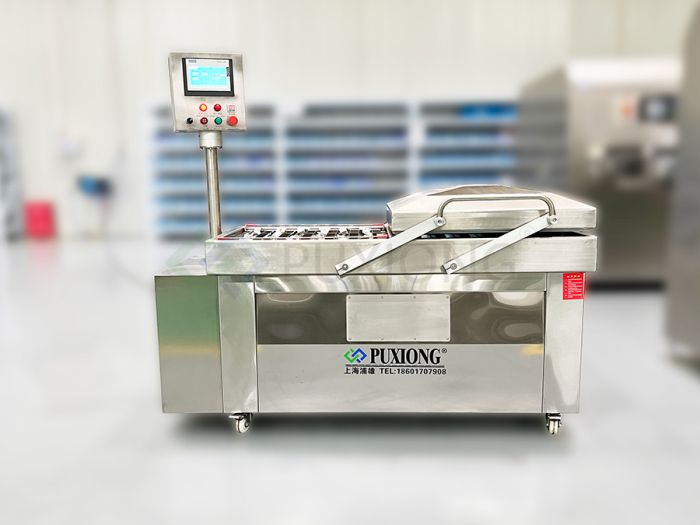
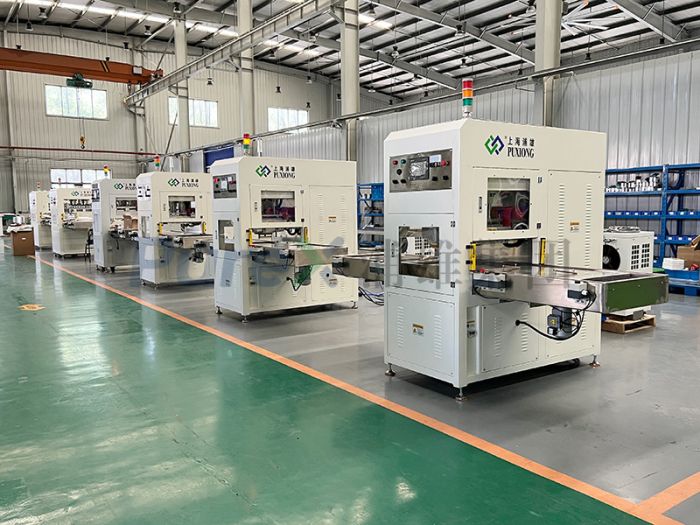
To meet the various technical requirements of protective clothing, a series of specialized processing equipment is required for production. Among them, the electric heating welding machine is an important manufacturing equipment, mainly used to make key parts of the protective clothing, such as sealing rings and weld seams.
1. Working Principle of the Electric Heating Welding Machine
The electric heating welding machine uses the heat generated by the current passing through the wire to melt the surface of the workpiece, and then applies pressure to achieve the welding purpose. This welding method has advantages such as simple operation, fast welding speed, and small heat-affected zone, and is therefore widely used in the production of protective clothing.
2. Main Components of an Electric Heating Welding Machine
(1) Power Supply: The device that provides electrical energy, usually AC or DC power.
(2) Control System: Responsible for controlling the parameters of the welding process, such as current, voltage, and time.
(3) Heating Element: The key component that generates heat, usually a heating wire or heating plate.
(4) Workbench: A platform used to place the workpiece to be welded, which can be lifted, rotated, etc.
(5) Welding Torch: A tool used to transmit the electric arc and control the welding position and speed.
(6) Cooling System: Used to reduce the temperature of the workpiece after welding to prevent deformation and cracking.
IV. Application of Electric Heating Welding Machines in the Production of Protective Clothing
1. Making Sealing Rings: One of the key parts of protective clothing is the sealing ring, whose main function is to tightly connect the breathing mask to the clothing, preventing harmful substances from leaking into the respiratory tract from the mask or pipes. 1. **Electric Heating Welding Machines:** These machines precisely control welding temperature and time, ensuring a strong bond between the sealing ring and the breathing mask or tubing. Furthermore, due to the special nature of the sealing ring material, a thermoforming process is typically used, a function perfectly suited for electric heating welding machines.
2. **Making Welded Seams:** Protective clothing typically consists of numerous seams that require high-strength materials to ensure overall strength and sealing performance. Electric heating welding machines can complete a large number of seams in a short time, increasing production efficiency. Additionally, since welded seams are often located in the most difficult areas of the garment, such as the collar and cuffs, electric heating welding machines reduce the workload and difficulty of manual sewing.
3. **Making Other Components:** Besides sealing rings and welded seams, protective clothing requires many other components, such as zippers and buttons. These components typically require connection using methods like resistance welding or ultrasonic welding, tasks that electric heating welding machines can also handle. For example, resistance welding firmly joins two metal parts, while ultrasonic welding uses high-frequency vibrations to generate heat at the contact surfaces, creating a permanent bond.