Quality Control of Medical Blood Transfusion Sets: Analysis of Key Elements in Heat-Sealing Connection Processes for Components Such as Tubing and Drip Chambers
Quality Control for Medical Blood Transfusion Sets: Analysis of Key Elements in Heat-Sealing Processes for Components Such as Tubing and Drip Chambers
I. Material Selection and Pre-treatment
1. Material Selection
Medical-grade polymer materials: Components such as tubing and drip chambers should be made from medical-grade polymers that comply with medical device standards, such as polyvinyl chloride (PVC) or polyolefins (PO). These materials must exhibit good biocompatibility, chemical resistance, and aging resistance to ensure the transfusion set does not adversely affect the patient during use.
Material quality: Material quality directly impacts the effectiveness of the heat-sealing connection. Therefore, it is essential to select raw materials with reliable quality and stable performance and to implement strict quality control measures.
2. Pre-treatment
Cutting and cleaning: Prior to heat sealing, the connecting ends of the tubing and drip chambers require precise cutting and thorough cleaning to remove impurities and burrs, ensuring the flatness and cleanliness of the mating surfaces.
Drying: Cleaned components must undergo a drying process to remove residual moisture and solvents, preventing the formation of air bubbles or compromised bond strength during heat sealing.
II. Process Parameter Control
1. Heating Temperature
Precise control: Heating temperature is a critical parameter in the heat-sealing process. It must be precisely controlled based on material properties and equipment capabilities to ensure the material achieves optimal flow during melting while avoiding deformation or scorching caused by overheating.
Temperature range: Generally, the heating temperature should be set near the material's melting point, allowing for a specific temperature range to accommodate performance variations between material batches.
2. Heating Time
Principle of moderation: The duration of heating directly affects the degree of material melting and the resulting bond strength. Insufficient heating time may lead to incomplete melting and weak bonds, whereas excessive heating time can cause material deformation or scorching due to overheating. Therefore, the heating time must be optimized based on material characteristics and equipment performance.
3. Pressure Control
Uniform application: During the pressing phase, uniform pressure must be applied to ensure that the molten material spreads adequately across the interface, forming a secure and robust bond. The pressure level should be adjusted based on material properties and equipment capabilities to avoid issues such as poor bonding caused by excessive or insufficient pressure.
III. Equipment Selection and Operation
1. Equipment Selection
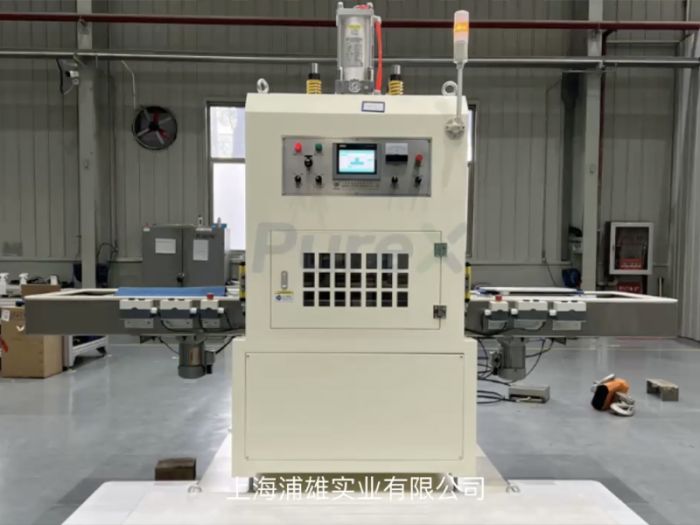
High-precision equipment: High-precision, highly stable heat-sealing equipment should be selected to ensure precise control of process parameters and consistent product quality.
Automation level: Equipment with automated control functions can minimize the impact of human factors on process parameters, thereby enhancing production efficiency and product quality.
2. Equipment Operation
Professional training: Operators must undergo professional training to familiarize themselves with equipment operation and maintenance procedures, ensuring the equipment remains in good working condition.
Regular maintenance: Routine maintenance and servicing should be performed to inspect component wear and operational status; damaged or consumable parts must be replaced promptly to ensure equipment stability and reliability.
IV. Quality Inspection and Monitoring
1. Quality Inspection
Seal integrity testing: Seal integrity tests should be conducted on heat-sealed components to ensure there are no leaks at the connection points.
Strength testing: Strength tests verify the robustness of the connection, ensuring the blood transfusion set can withstand the necessary pressure and impact during use.
2. Online Monitoring
Real-time monitoring: Online monitoring systems should be used to track and record key production parameters in real time, enabling the prompt detection and resolution of issues.
Data analysis: Monitoring data should be analyzed and processed to extract valuable insights for guiding production and optimizing processes.
The heat-sealing process for components such as medical blood transfusion set tubing and drip chambers encompasses multiple aspects, including material selection and pretreatment, process parameter control, equipment selection and operation, and quality inspection and monitoring. Only by comprehensively mastering these key elements and strictly controlling the quality of every stage can the safety and reliability of the final product be guaranteed.