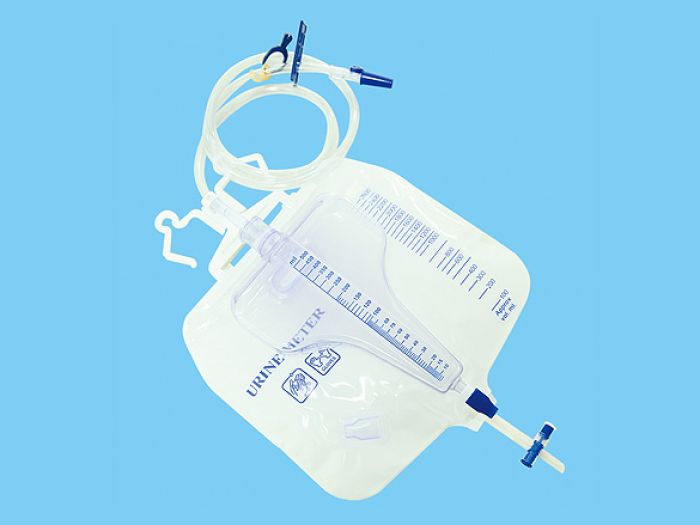
The core application scenarios of the one-time forming process of liquid bag welding and cutting
In the pharmaceutical and medical device sectors, the integrated welding and cutting one-step process is widely adopted for packaging and storing liquid drugs, biologics, medical solutions, and diagnostic equipment, thanks to its high precision, superior sealing integrity, and automation capabilities. Below are detailed applications and technical advantages of this process in the industry:
.jpg)
1. Core Application Scenarios
1.1 Infusion Bags and Dialysis Solution Bags
- Application:
Used to produce large-volume intravenous infusion bags (e.g., 500ml–3L) and hemodialysis solution bags for saline, glucose solutions, and dialysate. - Technical Requirements:
- Welds must pass biocompatibility tests (e.g., USP Class VI, ISO 10993) to ensure no cytotoxicity or sensitization.
- Sealing must withstand high-pressure steam sterilization (121°C, 30 minutes) with zero leakage; weld strength ≥15N/15mm.
- Cut edges must be smooth and burr-free to avoid scratching medical staff or contaminating liquids.
- Process Advantages:
- Eliminates scorching risks inherent in traditional heat-sealing, reducing chemical residues on drug-contact surfaces.
- Automated control ensures consistent weld width (tolerance ≤±0.2mm), minimizing burst risks during infusion due to weld defects.
1.2 Vaccine and Biologic Soft Packaging
- Application:
Soft packaging for single/multi-dose vaccines, monoclonal antibody drugs, and cell therapy agents, such as pre-filled liquid bags and lyophilized powder reconstitution bags. - Technical Requirements:
- Welds must endure low-temperature storage (-80°C to -20°C) and repeated freeze-thaw cycles without brittleness or delamination.
- Post-cutting edges must pass particle count tests (e.g., ISO 8871-3) to ensure no fiber shedding, avoiding contamination of high-purity drugs.
- Process Advantages:
- Ultrasonic cutting simultaneously seals切口 edges, eliminating microparticle contamination risks from traditional mechanical cutting.
- High-frequency welding focuses energy, reducing heat-affected zones to prevent degradation of active drug components.
1.3 Medical Irrigation Fluid and Contrast Agent Packaging
- Application:
Production of sterile, pyrogen-free bags for ophthalmic irrigation fluids, joint cavity perfusion solutions, and X-ray contrast agents. - Technical Requirements:
- Welds must comply with endotoxin limits (≤0.25EU/ml) per Chinese Pharmacopoeia sterile preparation standards.
- Cutting dimensions must align precisely with filling ports (tolerance ≤±0.3mm) for automated filling line compatibility.
- Process Advantages:
- The one-step process minimizes manual intervention, reducing microbial contamination risks in production environments.
- Integrated real-time inspection systems automatically reject dimensionally out-of-spec products, improving yield rates.
2. Technical Advantages in the Industry
- Compliance-Driven:
Meets stringent global pharmacopeial standards (e.g., USP, EP, CP) for biocompatibility, sterility, and chemical stability. - Process Reliability:
Automated systems ensure batch-to-batch consistency, critical for GMP-certified production. - Risk Mitigation:
Reduces human error and contamination vectors, aligning with FDA/EU Annex 1 guidelines for aseptic processing. - Scalability:
Adaptable to high-speed production lines (up to 500 bags/hour), supporting large-scale vaccine or biologic manufacturing.
.jpg)