Analysis of Heat-sealing Welding Technology for Vaccine Bags
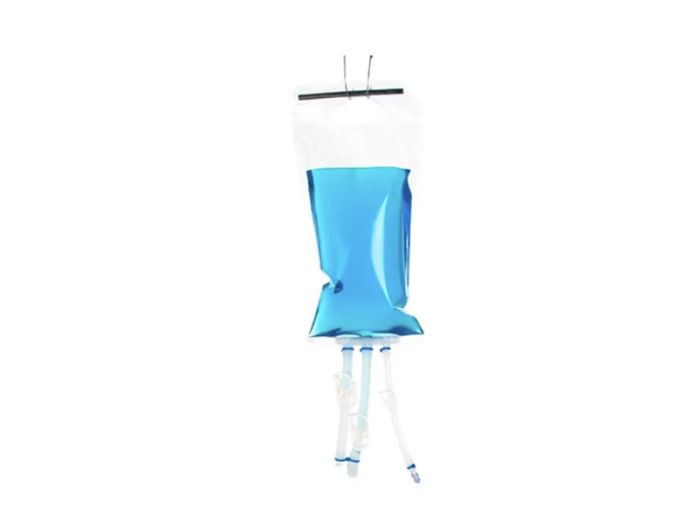
As a key packaging container for biological products, vaccine bags' heat-sealing welding quality directly affects the product's sterility and stability. Current mainstream technology uses thermocompression welding as its core, combined with auxiliary processes such as high-frequency and ultrasonic welding. By precisely controlling temperature, pressure, and time parameters, a high-strength sealed connection between the bag and the tubing is achieved.
.jpg)
I. Thermocompression Welding: The Core Process for Vaccine Bag Connection
Technical Principle: Thermocompression welding melts the surface of PVC or TPU film materials through a heated die, achieving intermolecular diffusion bonding under pressure. This process is suitable for connecting the bag body and tubing, forming a weld with strength close to that of the base material (over 90% of the base material's strength).
Key Equipment and Parameters
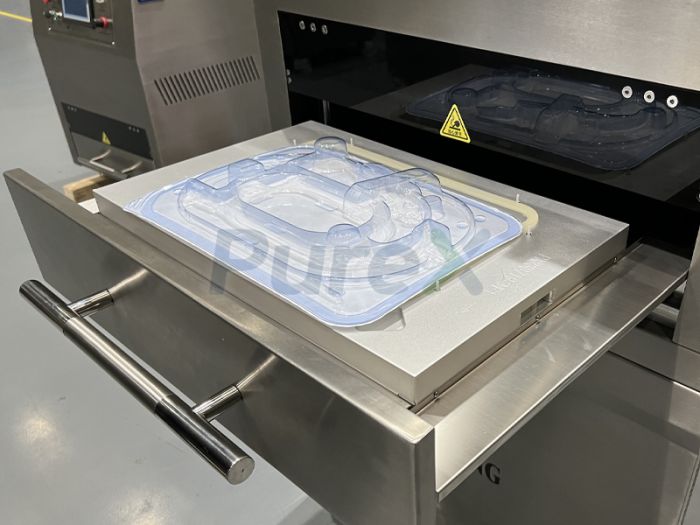
Equipment: A servo-driven upper and lower die head is used, equipped with a heating element for precise temperature control (e.g., temperature range from room temperature to 300℃).
Parameters:
Temperature: Needs adjustment based on film thickness.
Pressure: Connecting bolts and guide rods ensure the die head is installed horizontally; pressure uniformity affects weld tightness.
Time: Welding time needs to be controlled in conjunction with cooling time to avoid expansion of the heat-affected zone leading to deformation.
Application Cases
Bio-bag Welding Device: A servo-driven electric cylinder lowers the upper die head, combining with a heating element to achieve thermo-press welding. Suitable for large-capacity bags up to 3000L, with film lengths up to 2 meters.
Utilizing thermo-press + synchronous shearing technology, aseptic connection of tubing to the bag is achieved, compatible with 1/4"–7/8" tubing diameters, with connection time <45 seconds/time.
II. High-Frequency Welding: An Auxiliary Process for Improving Efficiency
Technical Principle: Utilizing high-frequency electromagnetic waves to heat the film material, suitable for large-area welding or repair. This process heats up quickly, but the weld strength is slightly lower than thermo-press welding (approximately 60% of the base material).
Application Scenarios
Composite Film Welding: In pharmaceutical packaging, high-frequency welding is commonly used for straight-line sealing of PVC, TPU, or composite films, but attention must be paid to the hygroscopic properties of the material, which can cause air bubbles.