Unveiling the Manufacturing Process of Blood Pressure Cuff Bladders
The blood pressure cuff bladder is a critical component of the cuff, directly influencing both measurement accuracy and patient comfort. Below is a detailed overview of the bladder and its manufacturing process:
I. Overview of the Blood Pressure Cuff Bladder
Definition and Function:
The bladder is an inflatable component placed inside the blood pressure cuff. During measurement, the bladder is inflated to compress the artery in the patient's upper arm, temporarily occluding blood flow; blood pressure values are then determined via auscultation or electronic sensors.
The bladder's design must meet mechanical requirements to ensure the cuff remains securely fastened to the arm without slipping. It also acts as a buffer during high-pressure readings, preventing excessive pressure that could cause subcutaneous hemorrhaging, thereby enhancing measurement accuracy.
Material Selection:
Bladders are typically made from soft, durable materials such as rubber, plastic, or TPU (thermoplastic polyurethane). These materials offer excellent elasticity and wear resistance, ensuring consistent performance over repeated use.
.png)
II. Manufacturing Process
Material Preparation:
The process begins with the preparation of raw materials—such as TPU—that meet specific requirements. These materials undergo rigorous quality testing to ensure they are non-toxic, odorless, eco-friendly, and compliant with medical-grade standards.
Cutting and Forming:
Cutting equipment is used to slice rolls of raw material into individual sheets or specific shapes. Based on product design specifications, these sheets are then folded, rolled, or thermoformed to create the bladder's initial shape.
Heat Sealing/Welding:
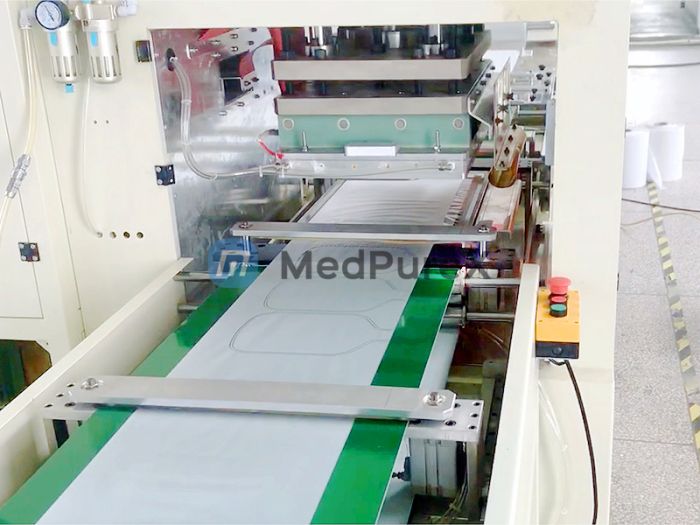
Heat sealing is a crucial step in bladder production. Equipment such as high-frequency welders, hot-plate welders, or ultrasonic welders applies heat and pressure to the edges or specific zones of the film, melting and bonding them together. Precise control of parameters—including temperature, pressure, and duration—is essential to ensure weld quality.
For complex bladder structures, multi-layer film welding may be required. In such cases, precise alignment between layers and strong weld integrity are vital to prevent issues like air leaks or ruptures during use. Cutting and Trimming:
After welding, cutting equipment is used to remove excess material, forming the finished bladder. The bladder then undergoes trimming and grinding to remove burrs and uneven areas, thereby enhancing its visual quality and comfort.
Quality Inspection and Packaging:
The manufactured blood pressure cuff bladders undergo quality inspections covering aspects such as weld integrity, airtightness, dimensional accuracy, and visual quality. Only products meeting quality standards proceed to the next stage.
Finally, the qualified bladders are packaged for storage and transport. Packaging procedures must address requirements such as moisture, dust, and pressure protection to ensure the product remains undamaged during transit and use.
III. Conclusion
The manufacturing process for blood pressure cuff bladders is complex and intricate, requiring strict control over quality and parameters at every stage. By employing advanced production equipment and techniques, high-quality, highly reliable bladders can be produced, ensuring accurate blood pressure measurement. Furthermore, as medical technology continues to evolve and innovate, manufacturing processes will be continuously optimized to meet changing market and patient needs.
.jpg)